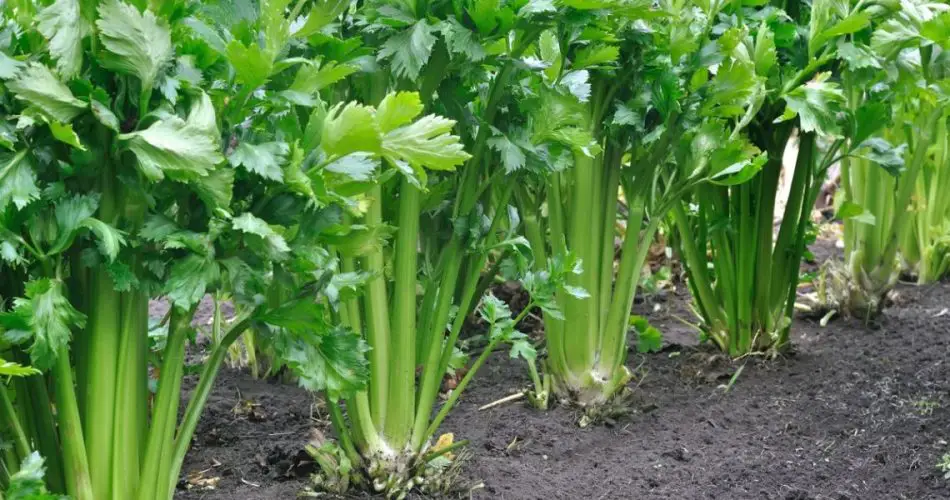
Celery is a vegetable highly valued for its tasty flavor and its many nutritional properties.
It is very popular in cooking for its ability to enhance the flavors of dishes.
However, growing them can be somewhat complicated for beginners.
Don’t worry, this practical guide reveals all the steps to follow to successfully plant, grow and harvest celery in your garden or on your balcony.
So, are you ready to become an expert in growing celery?
Choose the celery variety suited to your needs and your climate
There are two main categories of celery : stalk celery (or grooved celery) and celeriac.
The first is harvested for its crisp petioles, while the second is cultivated for its fleshy root. Each variety has specific characteristics in terms of flavor, texture, and disease resistance.
Choose a variety that suits your tastes, the space you have available, and the climate of your area.
Celery stalks require a temperate, humid climate and sunny or partially shaded locations. Common varieties include ‘Golden Giant’, ‘Tall Utah’, and ‘Pascal’.
Celery , on the other hand, is more resilient and tolerates climatic variations better. The ‘Géant de Prague’ and ‘Boule blanche’ varieties are highly prized for their tender and flavorful flesh.
Preparing the ground for an optimal celery crop
Celery is a plant that demands nutrients and water, which requires careful soil preparation.
To provide the best growing conditions for your celery, it is essential to work the soil deeply, aerating it and enriching it with compost or well-rotted manure.
Celery prefers cool, fertile, well-drained soil with a pH between 6 and 7. Test your soil’s pH to ensure it’s suitable for growing celery. If the soil is too acidic, you may need to add lime to rebalance the pH.
Sow celery seeds indoors to get a head start on planting
Since celery is a plant that is afraid of frost, it is best to start sowing indoors , about 10 to 12 weeks before the planned date for sowing in the ground.
To do this, use buckets filled with seed-starting mix and place some celery seeds on the surface. Lightly cover the seeds with potting soil, then water gently so as not to dislodge them.
Place the cups in a warm, bright location , ideally at a temperature between 18 and 21°C. Celery seeds usually take between 2 and 3 weeks to germinate.
Once the plants reach ten centimeters, you can transplant them individually into larger pots and gradually acclimate them to the outdoors by taking them out for a few hours a day.
Plant and care for celery in the ground for a bountiful harvest
Once the celery plants are strong enough and the risk of frost has passed, it’s time to put them in the ground.
To do this, choose a sunny or partially shaded spot, and maintain a distance of 30 to 40 cm between each plant so they have enough room to grow. Dig planting holes about 10 cm deep and add some compost to the bottom.
Then place the celery plants and fill them with soil, pressing lightly around the stems.
Celery maintenance mainly consists of regular watering to keep the soil cool and moist, as well as a liquid fertilizer rich in nitrogen and potassium every 15 days to support plant growth.
Don’t forget to mulch the soil to retain moisture and limit weed growth. Finally, watch for signs of diseases or pests, such as celery worms or rust, and treat promptly if an infestation occurs.
Celery harvest: when and how to proceed to enjoy its benefits?
Celery is generally harvested between 3 and 5 months after planting , depending on the variety grown and the climatic conditions.
For celery stalks, wait until the stalks are well-developed and dark green. For celeriac, the root should have reached a diameter of at least 10 cm before harvesting.
To harvest celery, use a clean, sharp knife or pruning shears to cut the stalks at the base of the plant, being careful not to damage the other stalks. You can also harvest celery stalks by picking them one by one, from the outside of the plant towards the inside.
As for the celeriac, gently dig it up with a spade fork so as not to damage the root.
After harvesting, celery can be stored for a few days in the refrigerator, wrapped in a damp cloth. You can also freeze it after blanching it for a few minutes in boiling water, so you can enjoy its flavors and benefits year-round.
By following this practical step-by-step guide, you now have all the keys to successfully growing celery in your garden or on your balcony.
Embark on an adventure and savor the pleasure of enjoying your own homegrown celery, both raw and cooked, in salads or in delicious recipes. Enjoy your meal!
