The street seemed quiet. The bus was stopped a few meters ahead, large, imposing, like so many others that pass by every day without anyone noticing. No one imagined that in a matter of minutes that ordinary place would become a turning point for many lives.

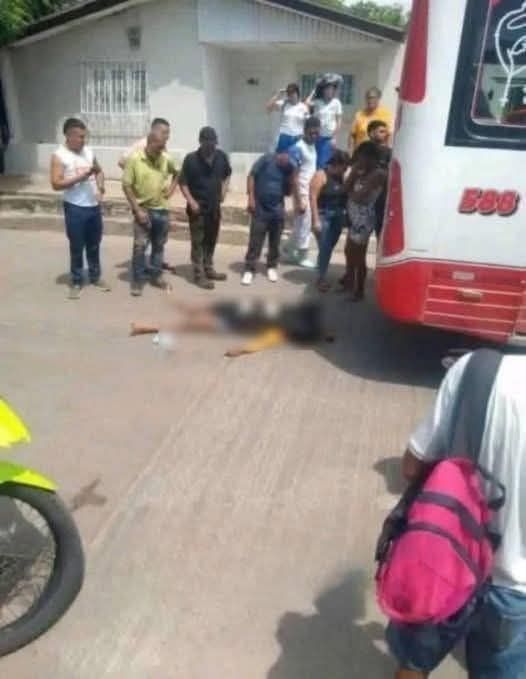
The body lying on the ground is nameless in the image, but it had everything: dreams, weariness, worries, love. It had everything until time suddenly stopped. Around it, people gather in silence, some with their hands on their heads, others staring blankly. No one is prepared to see life extinguished so starkly.
The bread never arrived at the table. The coffee with milk stayed waiting at home, next to two children who couldn’t understand why their father was taking so long. At that hour, they still believed the world was a safe place, that short outings always end with a return. No one had explained to them that sometimes routines can be broken.
The neighbors came out when they heard the noise, the murmurs, the sudden stop. Some knew him, others didn’t, but at that moment they all shared the same feeling: helplessness. Because there are no right words when all that happened was someone doing the right thing, the everyday thing, what was necessary for his family.
The bus, enormous, red and white, remains there as a silent witness. It feels no guilt, no pain. Machines don’t carry memories. Humans do. Every person who was there will carry this scene etched in their memory, even as the years go by.
Someone is on the phone. Someone else is praying silently. Another walks away because they can’t bear to look. The street is no longer just a street: it’s the last path a father walked thinking about his children, about their breakfast, about getting home quickly.
The hardest part isn’t the image itself, but what you can’t see: the house waiting, the backpacks packed, the empty cups. The future that changed in seconds. The question no one can answer: what if I had left five minutes later? What if the bus hadn’t been there?
This story isn’t about statistics or cold headlines. It’s about a simple decision, everyday love, and responsibility. It’s about how fragile life can be even when we’re not doing anything extraordinary.
Tomorrow the street will be full of people again, the bus will continue its route, the world will go on. But for those children, for that family, time will be divided in two: before going out for bread and after never returning.
Let this image not go unnoticed. Let it remind us that behind every “see more” there’s a whole story, a broken family, a promise that couldn’t be kept. Because no one should lose their life for something as simple as putting breakfast on the table.