How to make a vegetable garden from scratch, from soil preparation to planting
You too were captivated by locally sourced food, so you decided to claim a small plot of land and create a vegetable garden to watch your vegetables grow, harvest them, and bring your produce to the table. Where to begin? The first step is preparing the soil (and perhaps the most tiring!). You’ll need work gloves to prevent blisters, a shovel, a rake, a pickaxe, a spade, and manure.
If you’re a beginner , don’t be afraid. Follow the instructions step by step and maybe ask for advice from someone more experienced than you, or read some books on the subject. And remember, you only learn by doing, so don’t worry about making a lot of mistakes, especially at the beginning.
If, on the other hand, you’re a professional gardener , perhaps I’m still missing a trick or a plant you haven’t yet dared to grow. This could be the perfect time.
-
-
1.How to grow a vegetable garden: soil preparation
-
-
2.How to make a vegetable garden: before sowing
-
3.How to make a vegetable garden: what to grow
-
4.How to start a vegetable garden: when to begin
Soil preparation
Contrary to what you might think, the soil should be prepared in early winter. In fact, the soil should be loosened, fertilized, and left to rest before sowing in the spring.
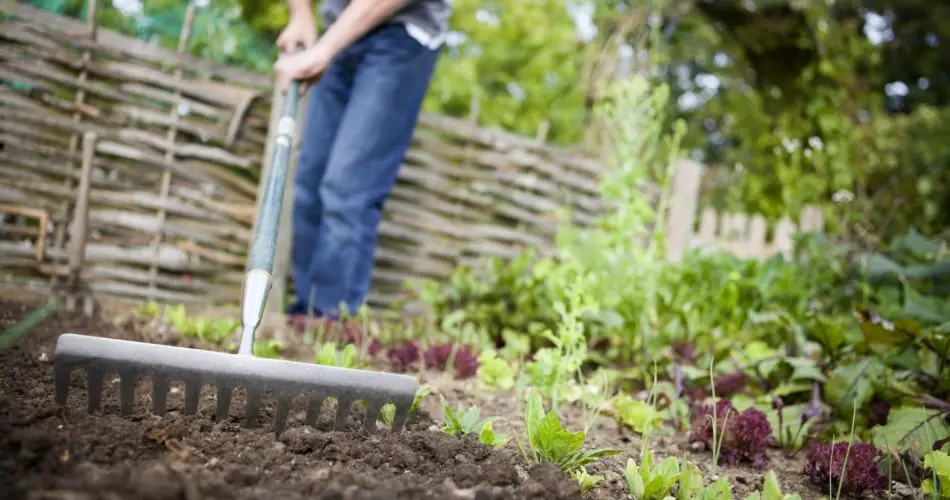
Now’s the time to roll up your sleeves. First, you need to dig the soil, turn over the ground where you’ll be planting your garden, and remove the roots of weeds and unwanted plants. Remove as many rocks as you can, as this will make the subsequent work easier.
Feed the soil with manure : horse manure is the best, but it’s also the most expensive; otherwise, use compost , which is perfect for fertilizing because it makes the soil very friable.
Break up any larger clods using a pick and rake, and then mix in the added fertilizer thoroughly. Finally, the soil surface should be as even and level as possible.
before sowing
The hard work doesn’t end there. The garden soil needs to be worked again shortly before planting . Weeds and unwanted plants should be removed if they are still present, as well as any large and medium-sized stones.
Work the soil until it is crumbly and well-leveled. At this point, you can organize your garden. Think about what produce you want to grow and divide the land into areas of different sizes. Seedlings and seeds should be placed in furrows spaced across the slope, following the direction of water runoff. How do you decide the distance between the furrows? Simply imagine what vegetables you will grow and how large the plants will be just before harvest.
Another important aspect is how to place the seedlings in the furrows : if they are spring or summer produce, you should insert the seedlings directly into the furrows to avoid wasting water; for winter produce, on the other hand, you should place them on top of the mounds of soil you have prepared in the furrows to prevent waterlogging.
that grow
Some vegetables are easy to grow, while others are more challenging. If you’re a beginner with just a shovel and rake, it’s best to focus on the simpler ones.
Tomatoes are one of them . They need plenty of sun and soil with a pH between 6 and 7. Dig a hole for each seed, spacing the holes at least 30 cm apart. Tomatoes are climbing plants, so provide a support structure for their growth.
Zucchini should be sown in spring, from March to May. Place two or three seeds in each hole and space the holes at least one meter apart . Zucchini need plenty of water, so water them daily, and you’ll see the first sprouts in a couple of weeks.
I can’t imagine a garden without carrots . At Ohga, we’ve already explained how to grow carrots. You should sow them between January and October. Again, make well-spaced holes and place a couple of seeds in each one. Make sure the soil is always moist, watering as needed, especially when the plants are still growing.
Lettuce will add an ornamental touch to your garden: its leaves are indeed very beautiful, large, and a bright green, or for some varieties, with a yellowish-red hue . Excellent for salads and rich in folic acid and vitamin A, lettuce needs well-fertilized soil. The seeds should be sown at a depth of 8 to 16 centimeters and watered daily.
Rich in iron and calcium, spinach should be grown in well-fertilized soil with compost. Water them thoroughly and maintain adequate spacing between seedlings.
But there are also many other vegetables available to you. At Ohga, for example, we’ve explained how to grow strawberries and how to grow an orange tree.
when to start
However, if you want to start a garden from scratch, the best times are always the spring and summer months. In fact, the increase in temperatures facilitates the germination process, that is, the appearance of sprouts from the seed. Nevertheless, you should be careful with the recommended sowing times for the specific plant you wish to grow, as some plants prefer different seasons.
