Below is a step-by-step guide with proven tips to help you grow garlic in water bottles, develop healthy roots, and achieve quick, satisfying harvests.
Why Grow Garlic in Water Bottles?
Growing garlic in water bottles offers several advantages:
-
No soil required, reducing mess and pests
-
Easy to monitor root growth
-
Perfect for windowsills, balconies, and small kitchens
-
Fast results, especially for garlic greens
-
Reuses plastic bottles, making it eco-friendly
While this method is best for harvesting garlic shoots and greens, it can also support early bulb development when managed correctly.
Choosing the Right Garlic
Start with fresh, firm garlic bulbs, preferably organic. Organic garlic is not treated with growth inhibitors, which improves sprouting success.
Separate the bulb into individual cloves, keeping the papery skin intact. Choose the largest cloves, as they produce stronger roots and more vigorous growth.
Avoid soft, moldy, or damaged cloves.
Preparing the Water Bottle
Use a clean plastic water bottle (1–1.5 liters works well).
-
Cut the bottle in half horizontally
-
Use the bottom half as the container
-
If the neck is narrow, it helps hold cloves upright
Fill the bottle with clean water until it reaches just below the base of the garlic cloves. The cloves should never be fully submerged, as this can cause rot.
Positioning the Garlic Correctly
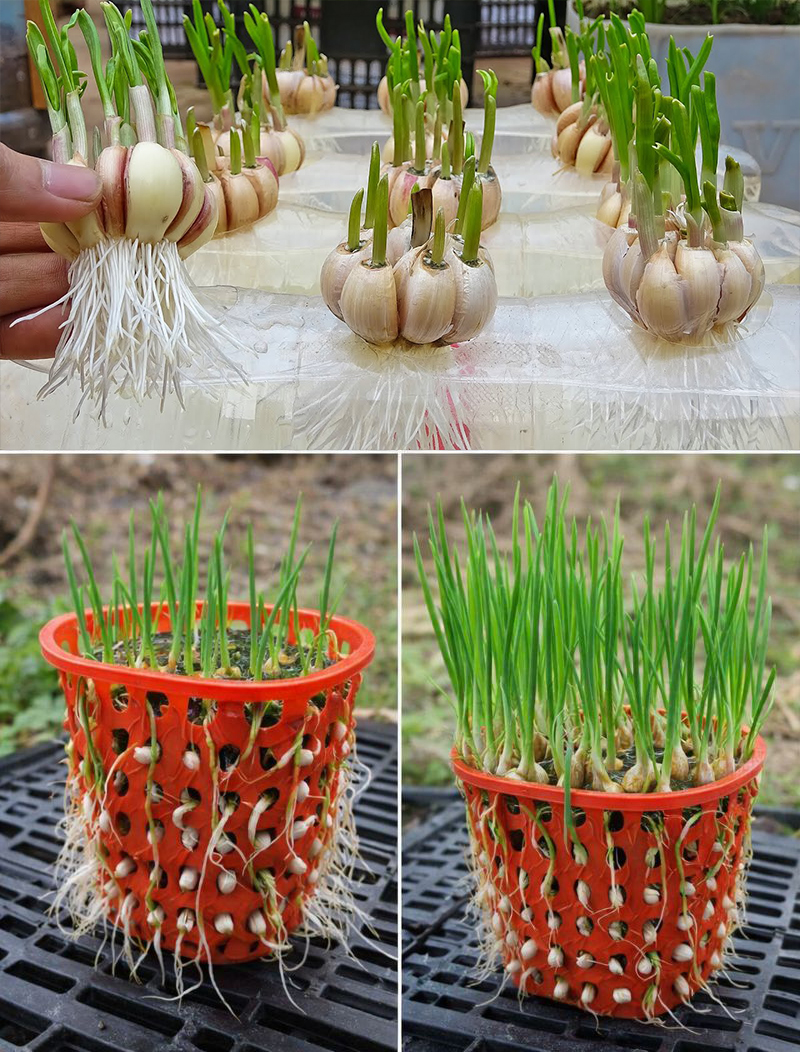
Place the garlic cloves pointed side up and flat base down toward the water. Only the base should touch or hover just above the water surface.
This positioning is critical. The roots emerge from the base, while the shoots grow upward. Proper placement ensures fast root formation and healthy top growth.
Encouraging Strong Root Growth
To promote abundant root development:
-
Place the bottle in a bright location with indirect sunlight
-
Change the water every 2–3 days to prevent bacteria buildup
-
Use room-temperature water
-
Avoid direct harsh sunlight during the first week
Within 3–5 days, white roots should begin forming. By the end of the first week, you’ll notice a dense root system spreading into the water.
Light Requirements for Fast Growth
Once shoots appear, garlic needs 4–6 hours of light per day.
A sunny windowsill is ideal, but if natural light is limited, a basic grow light works well. Rotate the bottle every few days so shoots grow straight and evenly.
Too little light results in thin, pale shoots, while excessive direct sunlight can stress young plants.
Maintaining Healthy Growth
Although garlic can grow in water alone, a few simple practices improve results:
-
Refresh water frequently to keep it oxygenated
-
Rinse roots gently if water becomes cloudy
-
Keep water level consistent
If desired, you can add a very diluted liquid organic fertilizer once every two weeks, but this is optional, especially if you’re harvesting greens.
When and How to Harvest
Garlic grown in water is usually harvested for its greens, which are flavorful and nutritious.
-
Shoots are ready to harvest when they reach 6–10 inches tall
-
Use clean scissors and cut just above the base
-
Leave the roots intact to allow regrowth
Garlic greens can be harvested multiple times from the same clove. They have a mild garlic flavor and are perfect for salads, stir-fries, soups, and omelets.
If you want to experiment with bulb formation, transfer the garlic to soil after roots are well established. However, full bulb development is limited in water-only systems.
Common Mistakes to Avoid
-
Submerging cloves completely in water
-
Using unclean or stagnant water
-
Placing bottles in dark areas
-
Using treated or chemically inhibited garlic
Avoiding these mistakes ensures healthy roots and fast, reliable growth.
Final Thoughts
Growing garlic in water bottles is a simple, efficient, and rewarding method that delivers quick results with minimal effort. Whether you’re short on space, new to gardening, or just enjoy watching roots grow in real time, this technique offers an accessible way to enjoy fresh garlic at home.
With proper positioning, clean water, and adequate light, you’ll have lush garlic greens ready to harvest in just a few weeks—all from a humble water bottle.