How to grow and care for the Christmas cactus, one of the most popular winter plants, so that it can continue to thrive beyond the Christmas season.
During the upcoming Christmas season, you may be given a Christmas cactus as a gift. You will need to take care of it so that it survives without problems and keeps you company for a long time with its beautiful and colorful flowers, which can brighten up any room.
First of all, you should know that the Christmas cactus is a plant species native to Brazil, botanically called Schlumbergera and belonging to the cacti family, which usually grows in tropical forests. It is a plant that prefers shade and humidity. This is why the interior environment of our houses in winter, with the heating on, becomes an ideal climate for lush growth.
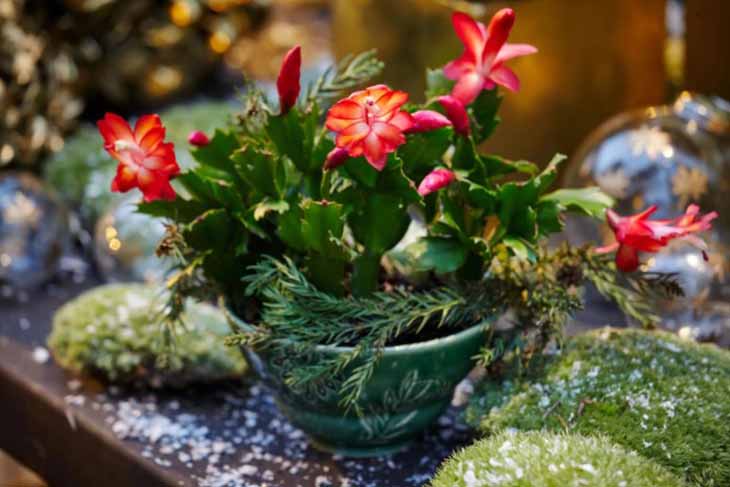
1. When does the Christmas cactus bloom?
Cacraceae may have different flowering periods, but what characterizes the Christmas cactus is that its flowers bloom just as the end of the year festivities approach, hence the name of this wild plant native to Brazil and other countries in America. Latina that was imported to Europe as a houseplant.
You can admire the flowers of the Christmas cacti between December and January. Their colors can vary from pink to red and from purple to red-purple. So that the flower buds do not wither before flowering, the Christmas cactus should be kept away from drafts and heat sources. Therefore, the Christmas cactus should not be placed near a door that is frequently opened or too close to a fireplace, stove or radiator.
2. Where to put it?
The ideal temperature for the indoor Christmas cactus is 20°C. To prolong the flowering of the cactus in the winter period, it is necessary to place it in a bright room. Later in the summer, the Christmas cactus can be placed outdoors in a partially shaded location so that excessive exposure to direct sunlight does not cause leaf scorch. In autumn, from the beginning of September, the plant can be moved indoors. The reduction of the hours of light and its exposure to the sun means that its flowering can be delayed until the Christmas period.
One of the perfect places to keep Christmas cacti in your home in December and January is on the inside windowsill, so the flowers can take advantage of daylight to bloom through the winter.
The elevated position of the plant is essential if you have pets such as dogs or cats. Ingesting some parts of the plant can cause diarrhea or vomiting in pets. Therefore, it must be placed in such a way that animals cannot easily reach it. If you have any problems, see your vet immediately.
3. When to water Christmas cacti?
The Christmas cactus is native to the tropical rainforests of South America and therefore prefers a humid climate. Therefore, it is necessary to pay special attention to watering, both in summer and winter. In winter it should be watered regularly, little by little, preventing the saucer from absorbing water, but keeping the soil moist. In summer the same procedure is followed, with the possibility of spraying a little water on the leaves using a sprayer. In the summer, the best time to water your Christmas cactus, which needs small amounts of water at a time, is in the evening. In particularly dry climates, try keeping it in a room with a small humidifier or other plants.
It is important to avoid stagnation of water and water regularly but not excessively, especially during flowering. Overwatering can cause root rot, which can lead to plant death. This rot can also be caused by a fungus, unfortunately not visible from the outside until the first damage appears. The flowering of the plant can sometimes last from December to February. In any case, once flowering is over, watering can be reduced. Throughout the life of the plant, watering should only be done when the soil appears dry on the surface. It may be enough to water just once or twice a week in winter.
The Christmas cactus loves soils with an acidic pH and, if possible, containing peat. The use of natural fertilizers during the flowering period is optional to ensure the nutrition of the plants. Fertilization should be stopped when the flowers drop off. If you want to fertilize, it is best to do it in spring and summer when physiological growth is underway.
4. How to propagate and multiply your Christmas cactus?
-
Propagation by cuttings
If you want to propagate your cactus, you can do it at home using stems from the previous year that have dried a few days before planting. Proceed as follows:
Take a plant stem about 10-15 cm long.
Set the cutting aside for at least 48 hours.
Once it has dried, you can plant it in soil possibly with a sandy mixture, burying it at least 3 cm deep in the ground.
-
Propagation by hand pollination.
Another way to propagate your Christmas cactus if you have two or more plants with different colored flowers is to use hand pollination. Specifically, you have to use a brush to collect the pollen from one and place it on the other and wait for the plant to bear fruit. These will have small seeds that can be planted in the spring.
5. Shelf life
Christmas cacti can have a very long life, up to 20 or 30 years, making them an even more symbolic Christmas gift.