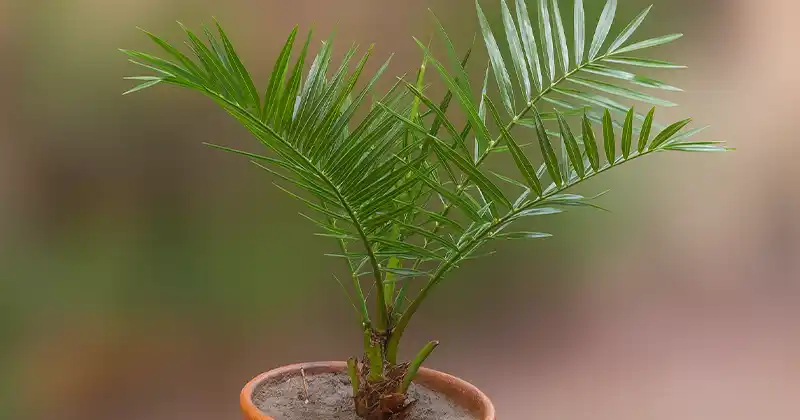
Want to turn a few store-bought dates into palm babies? You can. Date palms (Phoenix dactylifera) germinate reliably with warmth, depth, and patience. Below is a practical, step-by-step plan from seed to pot to ground, with pro tips for better success—especially in climates with cool winters.
Quick Overview (What You’ll Do)
- Select & prep seeds: Clean, soak 24–48 hours, (optional) lightly scarify, then pre-sprout warm.
- Sow deep in a tall pot: Use a fast-draining, sandy mix; keep 26–32 °C.
- Grow the seedling: Give strong light, careful watering, and magnesium/iron if leaves yellow.
- Up-pot gradually: Always use deep pots to fit the long taproot.
- Harden off & plant out: After nights stay > 15 °C, in a raised, well-drained spot. Protect the first winters if you have frost.
Before You Start: Reality Check & Varieties
- Seed-grown palms are unique. They won’t be identical to the fruit you ate.
- Date palms are dioecious. You’ll need at least one male and one female for fruit. With seed-grown trees, you won’t know sex for years.
- Climate matters. Dates love long, hot, dry summers and mild winters. Mature trees can survive brief light freezes, but young palms hate frost. If your winters dip below -5 °C, plan on overwintering in a large container or serious winter protection outdoors.
Materials
- Ripe dates with intact seeds (Medjool, Deglet Noor, etc.)
- Warm water (and a thermos or seed heat mat)
- Optional but recommended: 3% hydrogen peroxide for seed hygiene; a nail file for gentle scarification
- Tall nursery pots / treepots (at least 15–25 cm deep to start)
- Growing mix: 40% coarse sand + 30% perlite + 30% coco coir/peat (pH ~6–7.5)
- Clear bag or humidity dome (for germination)
- Thermometer/soil probe & seedling heat mat (for steady 28–30 °C)
- Slow-release palm fertilizer or dilute liquid feed (with Mg + micronutrients)
Step 1 — Select, Clean, and Wake the Seeds
- Pick viable seeds. Avoid seeds that are cracked or crushed. Dates from most grocery stores are fine; seeds remain viable even when fruits are dried.
- Clean thoroughly. Rinse off all fruit sugars (they can encourage mold).
- Sanitize (optional but helpful): Soak 10 minutes in 3% hydrogen peroxide, then rinse.
- Long soak: Put seeds in warm water (35–40 °C) for 24–48 hours. Change water once. The warmth hydrates the seed and speeds germination.
- Optional micro-scarification: With a nail file, very lightly scuff one end of the seed until the shine just dulls. Don’t gouge.
Pro tip: Keep the soak water warm by using a thermos or a jar in a warm spot near (not on) a radiator or on a heat mat set low.
Step 2 — Pre-Sprout the Smart Way (Fastest)
Two reliable methods:
- Baggie/Towel Method
- Wrap soaked seeds in a barely damp paper towel, slide into a zip bag, leave partly open for air, and place at 28–32 °C.
- Check every 2–3 days for the first root (radicle). Re-moisten if towels dry; if mold appears, rinse seeds and rewrap with a fresh towel.
- Vermiculite Cup Method
- Fill a cup with moist (not wet) vermiculite, bury seeds 1–2 cm deep.
- Keep 28–32 °C. Germination often begins in 2–8 weeks (some take longer).
When to pot: As soon as you see a 1–3 cm root emerging, move to a tall pot. Don’t wait for long roots that can snap.
Step 3 — Potting Mix & Container That Palms Love
- Use depth. Date palms push a strong taproot first. Shallow pots = root bind and stalled growth. Start with 15–25 cm deep pots; move to 30–40 cm as they grow.
- Mix for drainage: 40% coarse sand + 30% perlite + 30% coco/peat. It should feel gritty and airy.
- Planting depth: Lay the sprouted seed on its side, root down, 2–3 cm deep. Cover lightly.
- Water-in once to seat the mix; then let excess drain completely.
Pro tip: Fabric “air-pruning” pots prevent circling roots and keep drainage excellent.