1. Transforming an Old Light Bulb into an Orchid Pot
If you have an old electric light bulb, don’t throw it away! Instead, repurpose it into a unique and eye-catching orchid pot. Here’s how:
- Clean the light bulb thoroughly with soap and water.
- Dry it completely before carefully separating the components.
- Remove the inner core of LED bulbs, keeping only the necessary outer parts.
- Drill a round hole in the bulb to create an opening for planting.
- Make several drainage holes at the bottom to ensure proper water flow.
- Once the pot is ready, replant an orchid by first removing its old growing medium.
- Soak the orchid in a basin of water mixed with a teaspoon of lime powder. Lime helps disinfect the plant and enhances nutrient absorption, especially potassium (K), which is crucial for orchids.
- After 10 minutes, rinse the orchid with clean water and soak the growing medium (pine bark and charcoal) in lime water for an hour to eliminate harmful organisms like snails and cockroaches.
- Finally, plant the orchid in the light bulb pot and cover it with a thin layer of moss to retain moisture. Keep it in a cool, bright area and water after three days.
2. Growing Orchids Without Watering (Using Plastic Bottles)
If you often forget to water your orchids or travel frequently, this method is perfect. It involves recycling plastic bottles to create self-watering orchid pots. Here’s what you need to do:
- Take a large plastic bottle and use a small pot to mark two circles on the bottle’s body.
- Use a soldering iron to create two round holes and check that the small pots fit well inside.
- If you have orchids with root rot, trim off the damaged roots before replanting.
- To help revitalize dehydrated orchids, soak them in a basin of water, then let them sit in a cool place for a day.
- Use aloe vera to restore wilted orchid leaves by cutting it open and applying the gel directly. Aloe vera contains antibacterial and anti-inflammatory properties that protect orchids from diseases like root rot and leafhoppers.
- Blend any remaining aloe vera with water, strain, and dilute with one liter of water to create a nutrient-rich solution for watering other orchids.
- Finally, plant the orchid in a pot with pine bark and charcoal. Place the pot over a reservoir of water so that moisture is absorbed gradually. This method ensures consistent hydration without frequent watering. Water only once every two weeks using aloe vera or rice water.
3. Repairing a Damaged Orchid and Encouraging Blooming
If an orchid pot breaks or its flower stem snaps, don’t worry! You can still restore the plant and keep it healthy:
- Trim off any damaged roots and use a breathable plastic pot lined with foam to prevent small substrate leaks.
- Add charcoal and pine bark, two excellent growing mediums, before placing the orchid in the pot.
- Secure the plant with a stick and clips if necessary.
- If a leaf is torn, use a drop of 502 glue to reattach it. In just five minutes, the leaf will be intact again.
- To preserve broken flowers, disinfect a razor with 70-degree alcohol, cut the flower stem, and reattach it using branch-cutting tape. Secure with clamps and sticks.
- After three days, water the plant and soak the pot for about an hour.
- Cover the top layer with moss to maintain moisture.
- To encourage blooming, create a natural fertilizer by soaking three tablespoons of rice in 1.2 liters of water for 30 minutes. Rice water is rich in starch, vitamins (especially B1), lipids, and proteins that stimulate root growth and early flowering.
- Spray the rice water onto orchids once a week to strengthen branches, leaves, and flowers.
4. Using Potato and Ginger Water as a Natural Fertilizer
Potatoes are rich in essential vitamins and minerals that promote orchid health and blooming. Follow these steps to create a powerful organic fertilizer:
- Save potato peels instead of discarding them.
- Potatoes contain vitamin C, B6, calcium, iron, magnesium, phosphorus, and, most importantly, potassium, which enhances nitrogen absorption and promotes flower development.
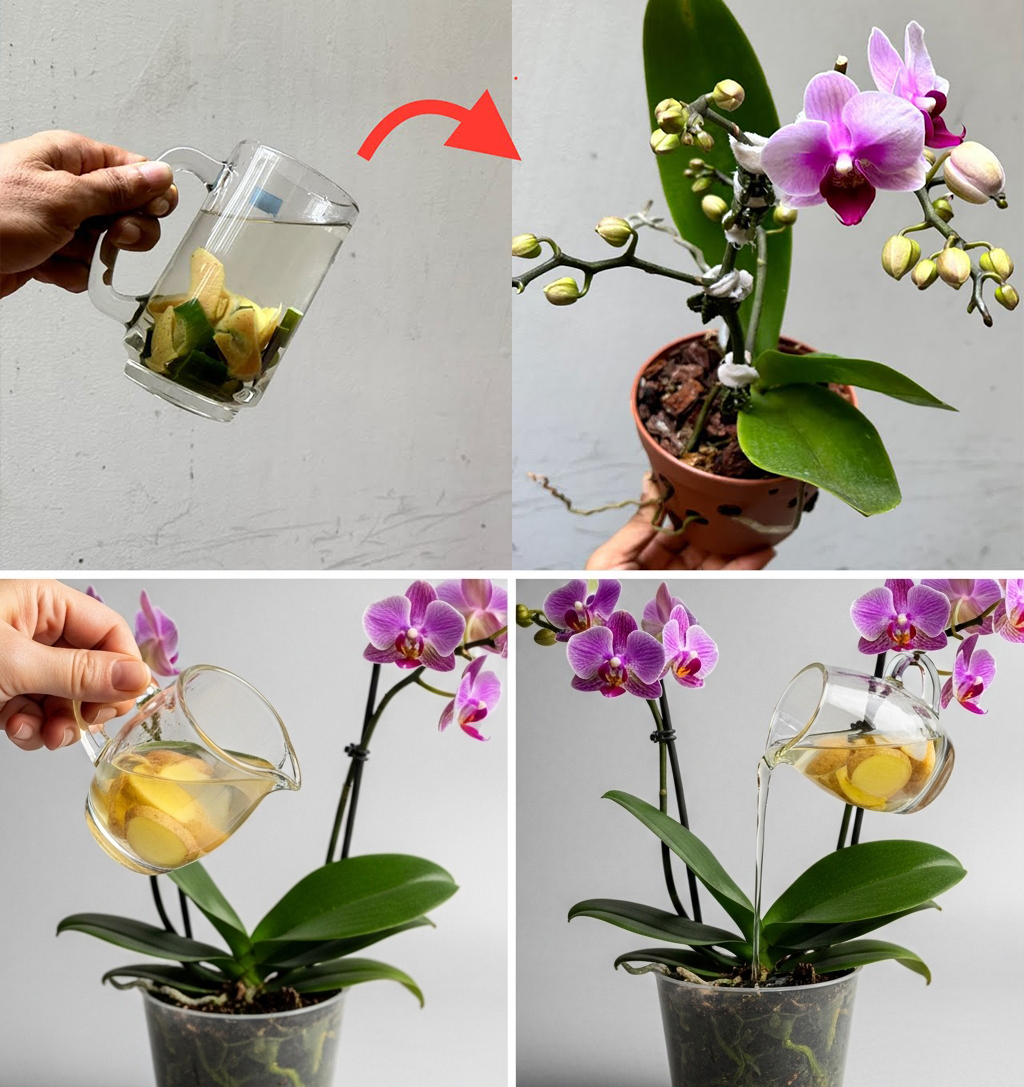
- Blend potato peels with a few slices of ginger. Ginger helps orchids root faster, grow stronger, and resist pests like ants and insects.
- Add 350 ml of water and blend thoroughly, then strain to remove residue.
- Dilute the mixture with 700 ml of water.
- Use the solution to clean orchid leaves, removing fungi and insect infestations.
- Soak orchid roots in the mixture for 15 minutes to promote strong growth.
- Dry the plant with a towel before replanting it in a recycled plastic bottle pot with proper drainage holes.
- Soak charcoal and pine bark in water for an hour before adding them to the pot.
- Cover with a thin layer of moss to retain moisture.
- Water only when the growing medium is dry, and apply the potato water fertilizer every 15 days.
Conclusion
By following these four innovative methods, you can grow stunning, healthy orchids while also embracing sustainable practices like recycling plastic bottles and repurposing household items. Using natural fertilizers like aloe vera, rice water, and potato-ginger solutions ensures that your orchids receive essential nutrients to bloom beautifully all year round. Try these techniques and enjoy thriving, vibrant orchids in your home or garden!