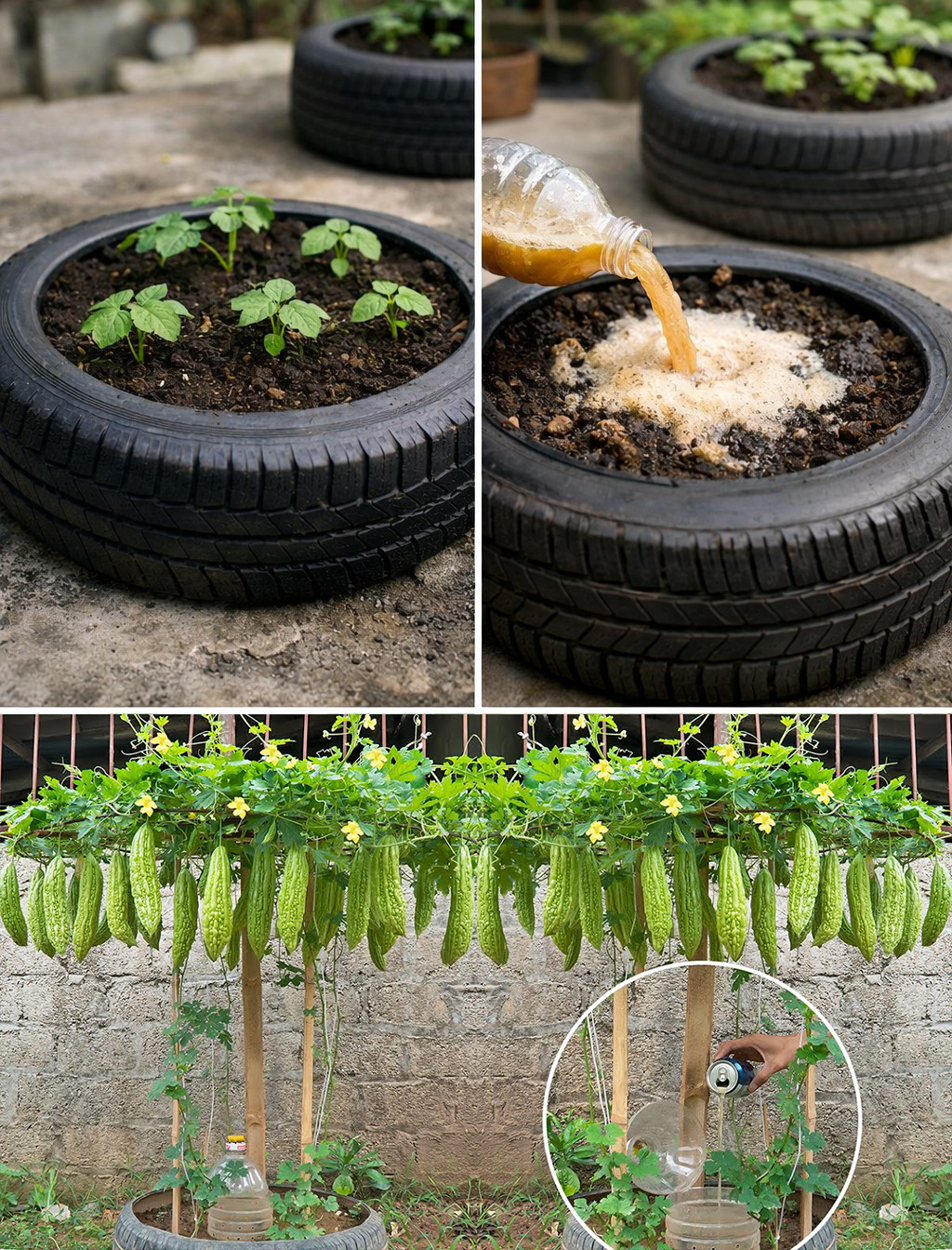
Fortunately, you can grow bitter melon in recycled car tires, even in a small yard, on a rooftop, or along a balcony. With a few used tires, a bit of compost, and a special homemade fertilizer made from beer, you can harvest plenty of fresh bitter melon right at home.
This method is simple, sustainable, and surprisingly productive. Here’s how to do it.
Why Grow Bitter Melon in Tires?
Old tires may seem like waste, but they are excellent for container gardening because:
-
-
They retain warmth, which promotes faster root growth
-
They offer deep, vertical planting space
-
They’re easy to stack and move
-
They recycle non-biodegradable materials
-
They’re perfect for families with limited outdoor space
-
Combined with a trellis or vertical support, tires can become mini-gardens ideal for climbing crops like bitter melon.
Materials You’ll Need
-
2–3 used car tires
-
Bitter melon seeds or young seedlings
-
Rich, loose garden soil
-
Organic compost or cow manure
-
Beer (for fertilizer)
-
Sugar and yeast (optional for fertilizer mix)
-
Trellis, netting, or bamboo stakes for vertical support
-
Mulch (straw, rice husks, or dried leaves)
Step-by-Step Guide to Growing Bitter Melon in Tires
1. Stack and Prepare the Tires
Clean the tires with water to remove dirt and residues. Choose a sunny spot that gets at least 6 hours of sunlight per day.
Stack 2–3 tires to form a deep growing container. If placing them on concrete, you can line the bottom with gravel or drill holes in the lowest tire for drainage.
2. Fill with Soil and Compost
Mix equal parts of:
-
Loamy garden soil
-
Organic compost or aged manure
-
Coco peat or sand (to improve drainage)
Fill the inside of the tire stack with this mixture, stopping just a few inches below the top.
Water the soil thoroughly before planting.
3. Sow Bitter Melon Seeds
Sow 2–3 seeds about 1 inch deep in the center of the top tire. After germination (5–7 days), thin out the weaker plants, leaving only the healthiest seedling.
If you’re using seedlings, plant one per tire stack and water gently to settle the roots.
4. Provide Vertical Support
Bitter melon is a fast-growing vine that needs strong support to grow upward. Place bamboo poles, a wire mesh, or netting behind the tire setup.
Train the vine to climb as it grows. This vertical setup keeps fruits clean, prevents rot, and saves space.
5. Make Homemade Beer Fertilizer
This simple fermented fertilizer helps boost plant growth, especially for flowering and fruiting vegetables like bitter melon.
Ingredients:
-
1 cup of beer (not light or alcohol-free)
-
1 tablespoon sugar
-
1 teaspoon baker’s yeast (optional)
-
1 liter of water
Mix all ingredients in a container and let it sit for 12–24 hours. The yeast and sugar activate fermentation, and the beer provides beneficial nutrients like B-vitamins and amino acids.
How to use:
Dilute the fermented mixture with more water (1:4 ratio) and pour around the base of the plant every 10–14 days.
Avoid splashing on leaves, and always water the plant normally first before applying liquid fertilizer.
6. Water and Mulch
Water the bitter melon plant regularly — once a day or more during hot weather. Keep the soil evenly moist, but avoid waterlogging.
Apply a layer of mulch around the base to retain moisture, prevent weeds, and regulate temperature. Dried leaves, straw, or shredded paper work well.
7. Encourage Fruit Production
Bitter melon plants produce both male and female flowers. You’ll often see more male flowers early on. Hand-pollination can improve fruit set — use a soft brush to transfer pollen from male to female flowers.
Pruning the vine tips after it reaches 5–6 feet tall can encourage lateral growth and more fruiting branches.
8. Harvesting
Bitter melons grow quickly once pollinated. Harvest when the fruit is still green and tender — typically 10–14 days after flowering, depending on the variety.
Don’t wait too long, or the fruits will turn yellow and become overly bitter or fibrous.
Cut the fruit with a small portion of the stem intact to avoid damaging the vine.
Final Thoughts
Even if you don’t have a traditional garden, you can still enjoy fresh, homegrown bitter melon by using recycled tires and a simple beer-based fertilizer. This method not only produces healthy, vigorous plants but also puts discarded materials to good use.
With just a few basic supplies and some care, your family can enjoy a regular harvest of this nutritious vegetable — no garden space required.