Understanding Sweet Potato Plants
Sweet potato (Ipomoea batatas), sometimes referred to as Indian sweet potato, is a climbing, flowering plant that thrives in warm climates. It is well-known for its edible tubers, which are packed with vitamins, minerals, and natural sweetness. Beyond its roots, the plant produces beautiful heart-shaped leaves and delicate flowers, making it ideal for both decorative and edible gardening.
Sweet potatoes are versatile and resilient. They adapt to a variety of soils, tolerate periods of drought, and can grow in pots, garden beds, or along trellises. Their fast-growing vines also make them perfect for vertical gardening.
Choosing the Right Sweet Potato for Cultivation
When starting sweet potato cultivation at home, select healthy tubers from a trusted source. Look for firm, blemish-free sweet potatoes with visible “eyes” or sprouts. These eyes are the points from which new shoots will grow. You can also propagate sweet potatoes from slips—small shoots grown from the tuber itself—which are particularly effective for home gardening.
Preparing Sweet Potatoes for Planting
Before planting, you can encourage rooting by following these simple steps:
-
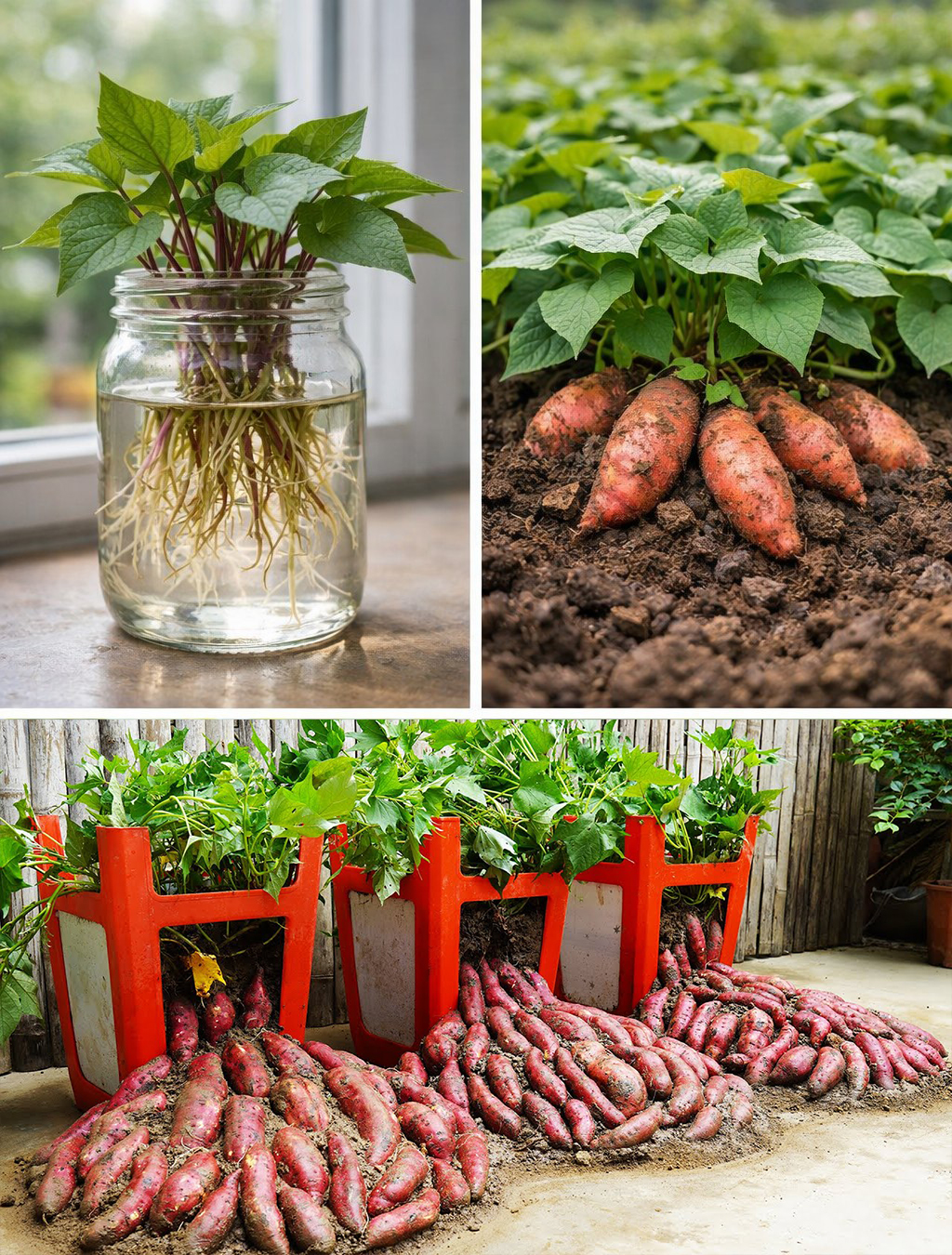
Sprouting Slips: Place the sweet potato in water or moist soil to promote sprout growth. In water, suspend half of the tuber above the surface using toothpicks so that the lower part remains submerged. Within 2–3 weeks, you will notice small green shoots emerging.
-
Root Development: Once the shoots reach 4–6 inches, they are ready to be cut from the tuber and planted. These cuttings are called slips and will develop their own roots once planted in soil.
This method ensures that your sweet potato plants start strong and have a higher chance of producing abundant tubers.
Planting Sweet Potatoes
Sweet potatoes prefer loose, well-draining soil with a slightly acidic to neutral pH. Raised beds or garden rows work best, but large containers are also suitable for smaller spaces. Plant slips about 12–18 inches apart to allow enough room for the vines to spread and for tuber development underground.
When planting, bury the slip up to its base, ensuring that the roots are well-covered and the shoot is upright. Water the soil thoroughly to help the slips establish. For vertical growth, you can provide trellises or fences for the vines to climb.
Care and Maintenance
Sweet potatoes are low-maintenance plants, but consistent care will improve yield and plant health:
-
Watering: Keep the soil moist but not waterlogged. Sweet potatoes tolerate short dry periods, but regular watering encourages strong root growth.
-
Sunlight: Ensure at least 6–8 hours of direct sunlight per day. Vines will grow longer and tubers will develop more effectively under full sun.
-
Fertilization: Use a balanced organic fertilizer every 3–4 weeks during the growing season. Avoid excessive nitrogen, which can encourage leafy growth at the expense of tuber development.
-
Pruning: Trim long vines to redirect energy into tuber formation if necessary. This also keeps the plant tidy and manageable.
-
Pest and Disease Management: Sweet potatoes are generally resistant to pests, but monitor for aphids, whiteflies, and fungal infections. Use organic solutions such as neem oil or compost tea to address problems early.
Harvesting Sweet Potatoes
Sweet potatoes typically take 3–5 months to mature, depending on the variety and growing conditions. Harvest when the leaves start to yellow and the vines begin to die back. Carefully dig around the tubers to avoid damage.
Once harvested, allow the sweet potatoes to cure in a warm, dry area for about 1–2 weeks. Curing enhances their natural sweetness, improves storage life, and toughens the skin. Properly cured sweet potatoes can last for several months in a cool, dry location.
Propagation and Continuous Growth
After your first harvest, you can continue propagating sweet potatoes from slips. Save healthy tubers and repeat the sprouting process for the next planting season. This allows you to maintain a continuous cycle of planting, growth, and harvest—all from the same initial batch of tubers.
Additionally, sweet potato vines can be used for decorative purposes while still contributing to root production, making them a dual-purpose plant for both aesthetics and food production.
Conclusion
Sweet potato cultivation at home is simple, productive, and versatile. From the initial rooting of slips to planting, watering, and harvesting, this resilient plant rewards consistent care with abundant tubers and attractive foliage. Whether you’re growing sweet potatoes as a food source or a climbing ornamental, the process is both enjoyable and cost-effective. By starting with healthy tubers or slips and providing proper sunlight, soil, and water, you can enjoy a bountiful harvest and a beautiful, green addition to your garden or home.
With minimal effort, sweet potatoes become a sustainable, rewarding plant to grow, offering nutrition, beauty, and satisfaction to any gardener.