Peanuts are not only delicious but also packed with protein, healthy fats, and essential vitamins. Growing your own peanuts can be incredibly satisfying and cost-effective, especially when you consider the health benefits of fresh, homegrown produce. While peanuts are typically grown in the soil, did you know you can grow them without any dirt at all? That’s right—soil-free peanut cultivation is possible, and it’s easier than you might think.
In this guide, we’ll walk you through how to grow peanuts hydroponically, in water, using simple materials you likely already have at home. This method is a perfect way to grow peanuts indoors or in limited space, and it offers all the nutritional benefits of traditional peanut plants.
Why Grow Peanuts Without Soil?
Growing peanuts without soil offers several benefits:
-
-
No soil-borne pests: You avoid the issues of soil pests like aphids, mites, and root rot.
-
Space efficiency: You can grow peanuts in small spaces, such as balconies, windowsills, or even indoors.
-
-
Faster growth: Hydroponic systems allow plants to access nutrients more efficiently, which can result in quicker growth.
-
Cleaner: Growing peanuts without soil means you won’t have to deal with the mess that often comes with traditional gardening.
Additionally, growing your own peanuts ensures they’re free from pesticides and other harmful chemicals, offering a fresh, nutritious snack option right from your home.
Materials Needed for Soil-Free Peanut Growing
To grow peanuts without soil, you’ll need a few simple materials
-
-
Peanut seeds: You can purchase raw peanuts (with the shells on) from most grocery stores. Make sure they are unsalted and unroasted.
-
Water: Clean, preferably distilled water, to ensure the plants have access to the minerals they need.
-
Hydroponic system or containers: You can create a simple hydroponic system using plastic cups, containers, or even glass jars. Alternatively, you can use a soilless medium like coconut coir or vermiculite if you’d like a semi-hydroponic setup
-
-
-
Nutrients: You’ll need hydroponic nutrient solutions, which are available at garden stores. These nutrients provide the essential minerals that the peanuts need to grow.
-
A bright, sunny location: Peanuts need plenty of light to grow. A south-facing window or grow light will help.
-
A small support structure (optional): If you want the plants to grow taller, you may need a support structure like a small trellis or stake to keep them upright as they grow.
-
Step 1: Soaking the Peanut Seeds
Start by soaking your peanut seeds in clean water for 24-48 hours. This step helps to soften the outer shell and jumpstarts the germination process. Once the peanuts have soaked, you’ll notice small roots beginning to form.
Step 2: Setting Up the Hydroponic System
You can grow peanuts using two main methods: the Kratie method (water-based) or a medium-based hydroponic system.
Option 1: Water-Based (Kratie) Method
-
-
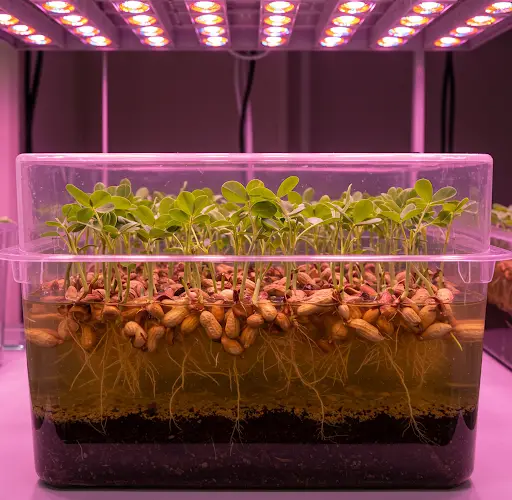
Prepare a container: Use a shallow container (like a plastic cup or jar) filled with water. The container should be large enough to hold the peanuts but not so deep that the peanuts will be submerged.
-
Position the seeds: Place the soaked peanut seeds in the container, making sure that the roots are submerged in the water, but the seeds themselves are just above the waterline. This ensures that the roots will grow into the water but the seed remains dry to avoid rot.
-
-
Secure the peanuts: To keep the seeds in place, you can use small net cups or a piece of mesh to hold them above the water. This setup mimics a hydroponic system where the plant roots are submerged, but the seed or plant itself is not sitting in water directly.
Option 2: Medium-Based Method (Semi-Hydroponic)
-
-
Choose a container: Use a small plastic or glass container with holes in the bottom for drainage. Fill it with a soilless medium such as coconut coir or vermiculite.
-
Plant the peanuts: Bury the soaked peanut seeds about 1 inch deep into the medium. Ensure the medium is damp but not overly wet.
-
-
Water and nutrients: Add a hydroponic nutrient solution to the container to give the peanuts the minerals they need to grow.
Step 3: Providing Light and Temperature
Peanuts need at least 6-8 hours of sunlight per day, so place your container in a location that gets plenty of natural light. A south-facing window is ideal. If you don’t have access to natural sunlight, consider using grow lights to provide consistent light for your plants.
In terms of temperature, peanuts thrive in warm environments, typically between 65°F and 75°F (18°C and 24°C). Ensure the growing area is kept within this temperature range.
Step 4: Maintenance and Growth
After planting your peanuts, they will begin to grow shoots and leaves. As the plants grow, it’s essential to provide regular maintenance:
-
-
Monitor water levels: Keep an eye on the water level in your container. For the water-based method, ensure that the roots are always submerged but the seeds themselves remain above water.
-
Add nutrients: If you’re using a hydroponic system, you’ll need to regularly add nutrients to the water to ensure the plants receive the necessary minerals for growth. Follow the instructions on your nutrient solution for the correct dosage.
-
-
Provide support: As the plants grow, you may need to provide some support with stakes or small trellises to help them grow upright.
Step 5: Harvesting Peanuts
Peanuts typically take about 4-5 months to fully mature. Once the plants start to flower, they will develop underground pods. These pods are where the peanuts will grow.
To harvest, carefully dig around the base of the plant and pull up the entire root system. You’ll see the peanuts attached to the roots, encased in their shells.
After harvesting, allow the peanuts to dry out for a few days in a warm, dry location before cracking open the shells to reveal the fresh, homegrown peanuts.
Final Thoughts
Growing peanuts without soil is a fantastic way to enjoy fresh, nutritious peanuts right from your home. Whether you’re limited by space, want to avoid soil pests, or just want to try a fun gardening project, hydroponic peanut cultivation is simple and rewarding.
With the right materials, care, and attention, you’ll be able to enjoy a healthy and sustainable source of peanuts without the need for traditional gardening. Give it a try, and in a few months, you’ll have your very own crop of homegrown peanuts!