Why Choose Self-Watering Plastic Bottles?
Self-watering plastic bottles offer several advantages:
-
Water conservation: The system reduces water waste by allowing plants to absorb moisture as needed.
-
Easy maintenance: Less frequent watering is required, making it ideal for busy individuals.
-
Space efficiency: Vertical setups or wall-mounted arrangements allow you to grow multiple plants in small areas.
-
Rapid growth: Consistent moisture and aeration promote faster root development and quicker harvests.
By recycling plastic bottles, you also contribute to reducing plastic waste, making this an eco-friendly gardening method.
Materials Needed
Before starting, gather the following materials:
-
Plastic bottles (1–2 liters work best)
-
Scissors or a craft knife
-
Cotton or sponge strips (for wicking water)
-
Soil mix (garden soil, compost, and sand in equal parts)
-
Green onion sets or seeds
-
Water
-
Optional: stakes or strings for vertical support if arranging multiple bottles
With these simple materials, you can create a fully functional self-watering system at home.
Preparing the Bottles
-
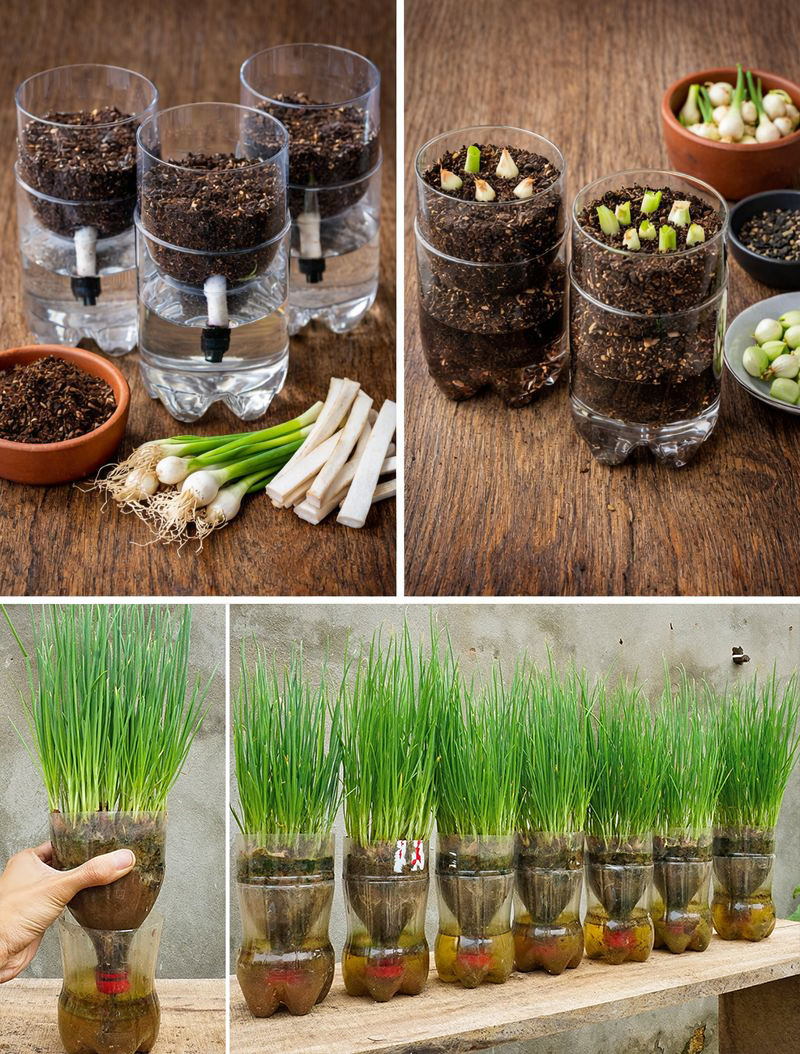
Cut the bottles: Cut each plastic bottle approximately one-third from the top. The top portion will be inverted to act as a funnel for planting.
-
Make drainage holes: Punch small holes at the bottom of the top portion to allow water to wick up into the soil.
-
Prepare the wicking system: Place cotton or sponge strips through the drainage holes, extending into the bottom section of the bottle. This will draw water up into the soil as needed.
-
Assemble the bottle: Invert the top portion into the bottom half of the bottle, creating a mini self-watering planter.
This setup ensures the soil remains consistently moist, which is critical for green onion growth.
Planting Green Onions
You can grow green onions from seeds, bulbs, or kitchen scraps. Here’s how:
-
From seeds: Sow seeds about ½ inch deep into the soil and gently water. Keep the soil moist until germination.
-
From sets: Plant small green onion bulbs directly into the soil, ensuring the roots are well-covered.
-
From kitchen scraps: Use the white root ends of previously used green onions. Plant them in soil with the roots submerged and leaves facing upward.
Space the plants about 1–2 inches apart in each bottle to allow adequate room for growth. The vertical design enables multiple plants in a compact space.
Care and Maintenance
Maintaining green onions in a self-watering bottle is simple but requires attention to a few key factors:
-
Watering: Fill the bottom reservoir with water. The wicking system will draw water into the soil, keeping it moist. Check the water level regularly and refill as needed.
-
Sunlight: Green onions need at least 4–6 hours of sunlight per day. Place the bottles on a sunny windowsill, balcony, or terrace.
-
Soil nutrition: Although green onions are not heavy feeders, adding a little organic compost every 2–3 weeks boosts growth.
-
Pruning: Trim leaves regularly to encourage new growth. Harvest by cutting leaves from the top while leaving the roots intact for continuous regrowth.
This minimal care ensures healthy plants and a rapid harvest cycle.
Fast Growth and Harvesting
One of the main advantages of this method is the speed of harvest. Green onions typically grow quickly under consistent moisture and sunlight. Depending on the variety:
-
First harvest: Green onions can be ready to harvest within 3–4 weeks from seeds, or even faster if regrowing from kitchen scraps.
-
Continuous harvesting: By leaving the roots intact, you can harvest multiple times. Simply trim the green tops as needed, and the plant will continue producing fresh shoots.
-
Yield: Each bottle can support several plants, providing a steady supply of green onions for home cooking.
Tips for Maximum Success
-
Use clean bottles and fresh soil to prevent contamination or diseases.
-
Rotate bottles occasionally if sunlight is uneven to ensure all plants grow uniformly.
-
Avoid overwatering; the self-watering system reduces this risk, but the bottom reservoir should not be flooded.
-
Consider stacking bottles vertically or hanging them on walls to maximize space.
Eco-Friendly and Cost-Effective Gardening
Using recycled plastic bottles to grow green onions is not only practical but also environmentally responsible. This method reduces plastic waste, saves water, and allows you to enjoy homegrown vegetables without relying on chemical fertilizers or pesticides. It’s a perfect example of sustainable urban gardening.
Conclusion
Growing green onions in self-watering plastic bottles is a simple, fast, and highly productive method that works in small spaces. By following this easy guide, you can have a continuous supply of fresh, flavorful green onions year-round. The combination of vertical design, self-watering system, and minimal maintenance makes this method ideal for anyone, from urban gardeners to beginners. With consistent care and proper sunlight, you can enjoy abundant green onion harvests, reduce food costs, and practice eco-friendly gardening—all without a traditional garden.