Why Chayote is Ideal for Home Gardening
Chayote is a hardy and resilient plant that thrives in warm climates. It grows as a climbing vine, producing lush green foliage and multiple fruits along each stem. Unlike many other vegetables, chayote vines are extremely productive and can yield fruit for several months with proper care. Its versatility in the kitchen—ranging from stir-fries to soups and salads—makes it a favorite among home gardeners.
Growing chayote at home offers several advantages:
The “secret” to producing many chayote fruits at low cost lies in three main strategies: using simple support structures, minimal but effective fertilization, and strategic planting methods.
1. Use Low-Cost, Durable Supports
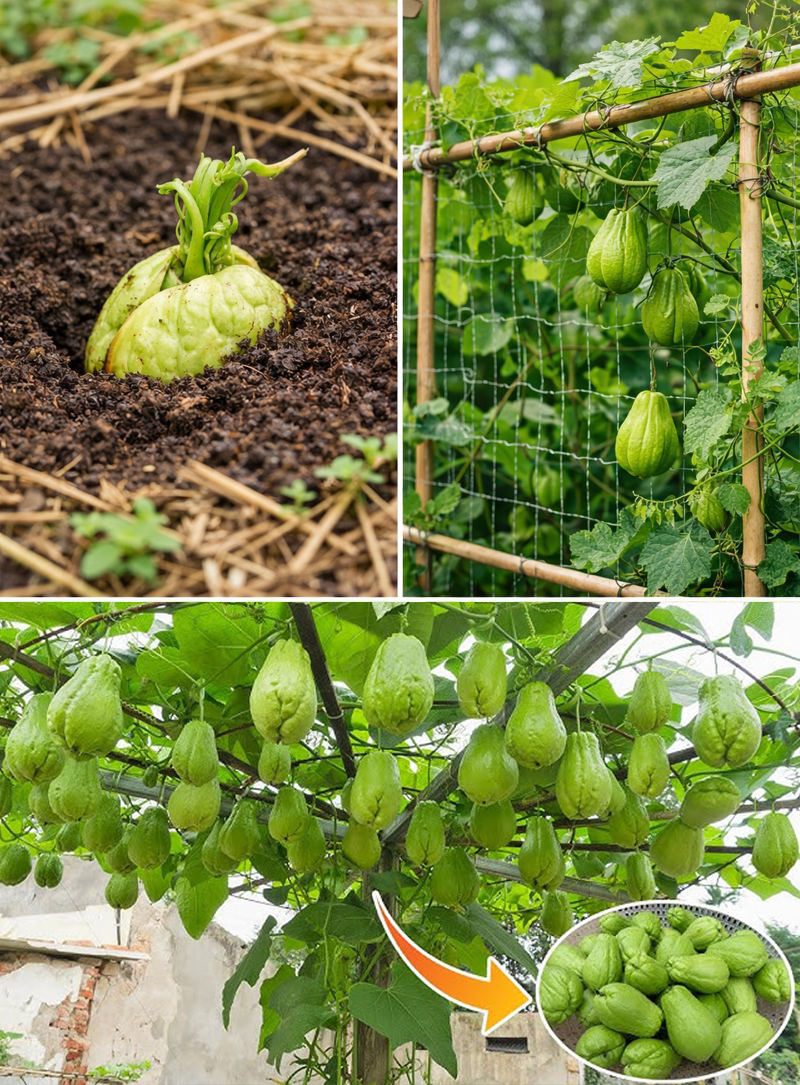
Chayote is a climbing plant, so providing strong support is essential for vine growth and fruit production. Instead of investing in expensive trellises, you can use everyday materials such as bamboo sticks, wooden poles, or recycled metal frames. Vertical supports encourage the vines to grow upward, reducing space requirements and making fruit easier to harvest.
Additionally, elevating the vines prevents fruit from touching the ground, reducing rot, pest damage, and wasted crops. Using low-cost materials not only saves money but also allows gardeners to scale up the number of plants without significant investment.
2. Minimal but Effective Fertilization
Chayote is a heavy feeder, but fertilizing does not have to be expensive. Organic and low-cost alternatives can provide the nutrients the plant needs for optimal growth and fruiting. Consider these options:
-
Compost: Homemade compost from kitchen scraps and garden waste enriches the soil naturally.
-
Banana peels: High in potassium, they support flowering and fruit development.
-
Vermicompost: Worm castings provide essential nutrients and improve soil structure.
-
Liquid fertilizer: A simple solution of diluted compost tea or manure tea can nourish the plant without costly commercial fertilizers.
Apply organic fertilizers every 4–6 weeks during the growing season, focusing on potassium and phosphorus, which are vital for flowering and fruiting. Avoid over-fertilizing with nitrogen-heavy fertilizers, as this encourages excessive foliage growth at the expense of fruit.
3. Strategic Planting and Care
Selecting a healthy chayote fruit or seedling is the first step toward abundant harvests. When planting, choose a sunny location with well-draining soil. Chayote thrives in warm conditions, so ensure the site receives at least 6–8 hours of sunlight daily.
Plant the fruit horizontally, partially buried in soil, with the sprouting end facing upward. Water lightly to settle the soil, then maintain consistent moisture, especially during flowering and fruiting. Overwatering can lead to root rot, so allow the soil to dry slightly between waterings.
Vine training is another crucial factor. Gently guide the growing tendrils toward the support structure. Prune unnecessary side shoots to focus the plant’s energy on producing flowers and fruit. This method increases fruit quantity without additional cost or labor.
Low-Cost Methods to Increase Yield
-
Mulching: Use dried leaves, straw, or newspaper to retain soil moisture and suppress weeds.
-
Companion planting: Planting legumes nearby can naturally enrich the soil with nitrogen, boosting growth.
-
Hand pollination: While natural pollinators like bees help, lightly transferring pollen with a brush ensures maximum fruit set.
-
Fruit support slings: For heavier fruits, simple cloth or net slings prevent vines from breaking, allowing more fruits to mature.
These techniques collectively reduce input costs while maximizing productivity, proving that high yields don’t require expensive fertilizers or advanced equipment.
Harvesting Chayote
Chayote fruits are typically ready to harvest 3–4 months after planting. Pick fruits when they are firm, smooth-skinned, and medium-sized, around 10–15 cm (4–6 inches) in length. Regular harvesting encourages the plant to produce additional fruits throughout the season. With proper care and the strategies above, a single chayote vine can yield multiple fruits over several months.
Benefits of Low-Cost Chayote Gardening
-
Economical: Minimal investment in soil, fertilizer, and support structures.
-
High yield: Strategic care ensures abundant fruit production.
-
Sustainable: Reduces chemical inputs and food waste.
-
Practical: Suitable for small spaces, balconies, and container gardening.
Conclusion
Growing chayote at home does not have to be expensive or labor-intensive. By using low-cost support structures, organic fertilization, and simple care techniques, you can produce an abundant harvest of nutritious fruit for your family year-round. With strategic planting, minimal maintenance, and smart resource use, even beginner gardeners can enjoy the rewards of fresh, homegrown chayote while keeping costs low. This approach combines practicality, sustainability, and productivity, making chayote an ideal choice for home gardeners seeking abundant fruit without heavy investment.