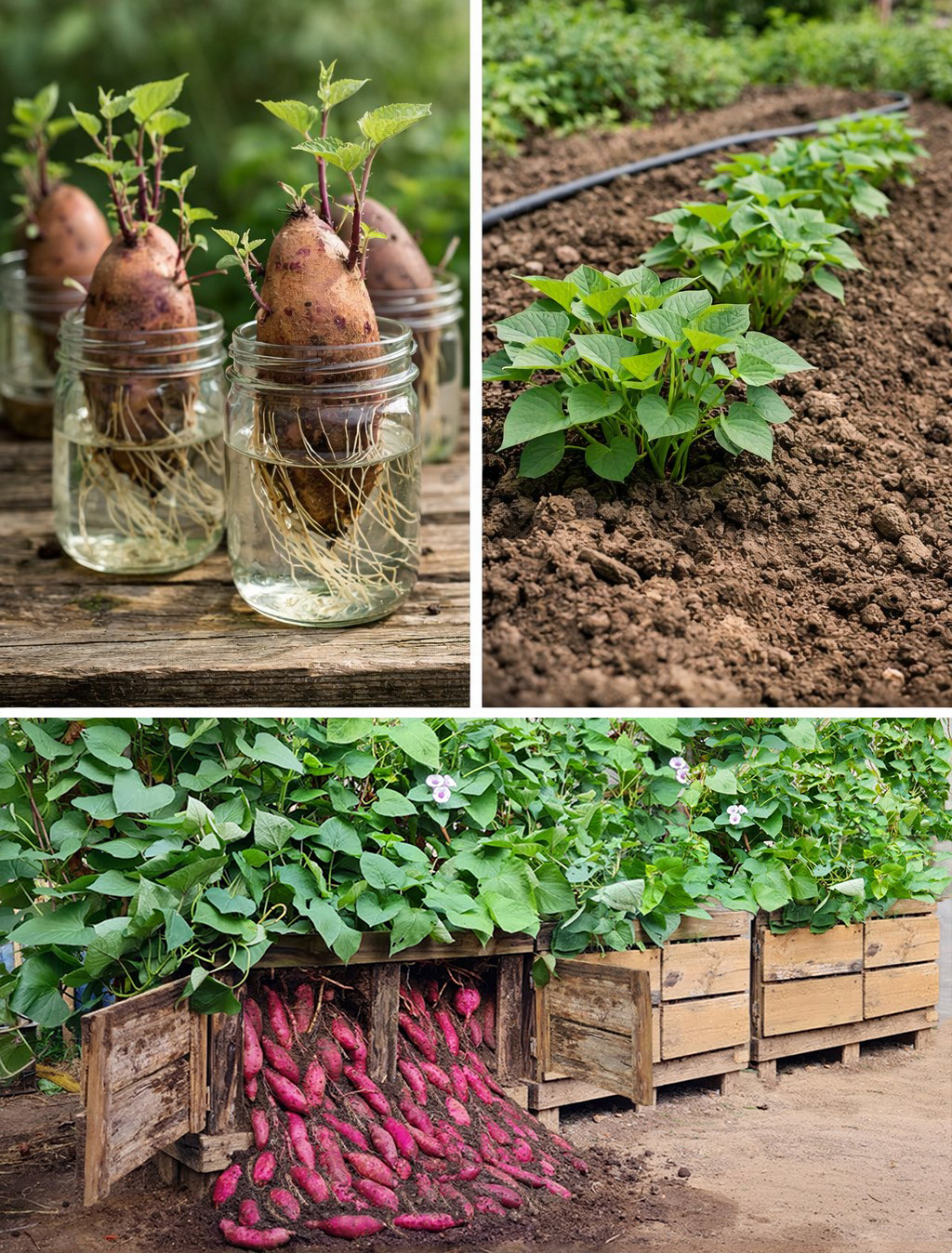
Why Grow Sweet Potatoes in Pallets?
- Maximizes Space: Vertical growing saves ground space while allowing for more plants.
- Encourages Higher Yield: The pallet structure promotes better aeration and root expansion, leading to more tubers.
- Eco-Friendly: Reuses wooden pallets, reducing waste and supporting sustainability.
- Cost-Effective: Requires minimal investment, as pallets can often be sourced for free.
- Easy Harvesting: Tubers can be accessed easily without excessive digging.
Materials Needed for Growing Sweet Potatoes in Pallets
To set up your pallet sweet potato garden, you will need:
- Wooden pallets (in good condition, untreated wood is best)
- Sweet potato slips (young plants or vine cuttings)
- Rich potting soil (loamy, well-draining)
- Compost or organic fertilizer (to provide nutrients)
- Straw or mulch (to retain moisture)
- Watering can or hose (for regular watering)
- Garden stakes or zip ties (for securing the structure)
- Sharp knife or scissors (for planting slips)
Step-by-Step Guide to Growing Sweet Potatoes in Pallets
Step 1: Preparing the Pallet Structure
- Choose the Right Pallet: Look for pallets made of untreated, non-toxic wood to avoid harmful chemicals in your soil.
- Position the Pallet: Stand the pallet upright against a sturdy fence or wall, or lay it flat on the ground, depending on your available space.
- Secure the Sides: If standing vertically, attach a wire mesh or wooden slats on the back to keep the soil from falling out.
- Add Drainage Holes: Ensure proper drainage by making small holes if needed.
Step 2: Filling the Pallet with Soil
- Layer the Soil: Start by adding a base layer of straw to aid drainage, followed by a nutrient-rich potting mix.
- Mix in Compost: Blend organic compost or fertilizer into the soil for added nutrients.
- Fill the Gaps: Ensure all openings in the pallet are packed with soil to support plant growth.
Step 3: Planting Sweet Potato Slips
- Choose Healthy Slips: Use disease-free, strong sweet potato slips.
- Create Planting Holes: Space the slips 8-12 inches apart, making holes deep enough for the roots.
- Insert the Slips: Place the slips in the holes, covering the roots while leaving the top leaves exposed.
- Firm the Soil: Gently press the soil around the base of each plant to secure it.
Step 4: Caring for Your Sweet Potato Plants
- Watering: Keep the soil consistently moist but not waterlogged, especially during the first few weeks.
- Mulching: Cover the top of the soil with straw or mulch to retain moisture and prevent weeds.
- Fertilizing: Apply organic compost or liquid fertilizer every two to three weeks to promote healthy growth.
- Pruning: Trim excessive vines to direct energy towards tuber production.
- Pest Control: Check for pests like aphids and beetles, using neem oil or natural insecticides if necessary.
Step 5: Harvesting Your Sweet Potatoes
- Check for Maturity: Sweet potatoes are ready to harvest in 90-120 days, when leaves begin to yellow.
- Loosen the Soil: Carefully loosen the soil inside the pallet before pulling the tubers out.
- Gently Remove Tubers: Avoid bruising by handling them carefully.
- Cure the Sweet Potatoes: Store them in a warm, dry area for about 10-14 days to develop their sweetness.
Best Sweet Potato Varieties for Pallet Growing
Certain sweet potato varieties perform well in pallet gardening:
- Beauregard: Fast-growing with high yields.
- Jewel: Disease-resistant and flavorful.
- O’Henry: Produces creamy white-fleshed tubers.
- Purple Sweet Potato: Rich in antioxidants and visually striking.
Common Problems and Solutions
| Problem | Cause | Solution |
|---|---|---|
| Small tubers | Insufficient soil depth | Add more soil and compost |
| Leaves turning yellow | Overwatering or poor drainage | Water less, ensure drainage |
| Pests eating leaves | Aphids, caterpillars | Use organic pest control |
| Weak vines | Lack of nutrients | Apply organic fertilizer |
| Moldy soil | Too much moisture | Reduce watering, increase airflow |
Additional Tips for Success
- Rotate Crops Yearly: Prevent soil depletion by rotating where you plant sweet potatoes.
- Provide Vertical Support: If growing upright, allow vines to climb on a trellis.
- Mix in Companion Plants: Grow basil, onions, or marigolds nearby to repel pests.
- Use a Moisture Meter: Prevent overwatering by monitoring soil moisture levels.
- Start Indoors: If growing in a colder climate, start slips indoors before transferring outside.
Conclusion
Growing sweet potatoes in pallets is a smart and innovative method that maximizes space while ensuring a bountiful harvest. This eco-friendly approach not only repurposes wooden pallets but also provides a structured and efficient way to cultivate nutrient-rich sweet potatoes at home. Whether you have a small backyard, a balcony, or limited gardening space, this technique allows you to enjoy homegrown sweet potatoes with minimal effort. Give it a try and experience the joy of harvesting a huge yield of delicious, homegrown sweet potatoes!